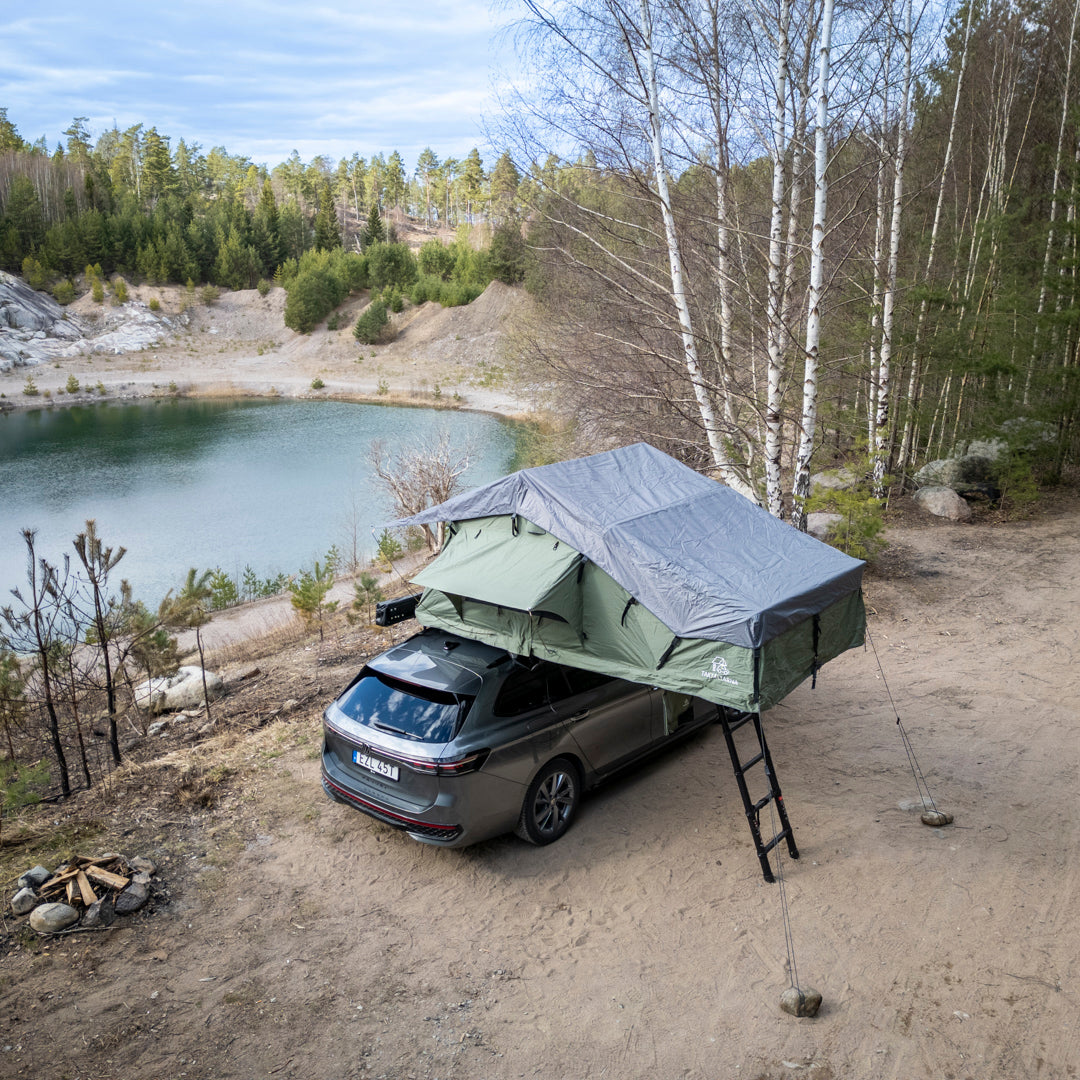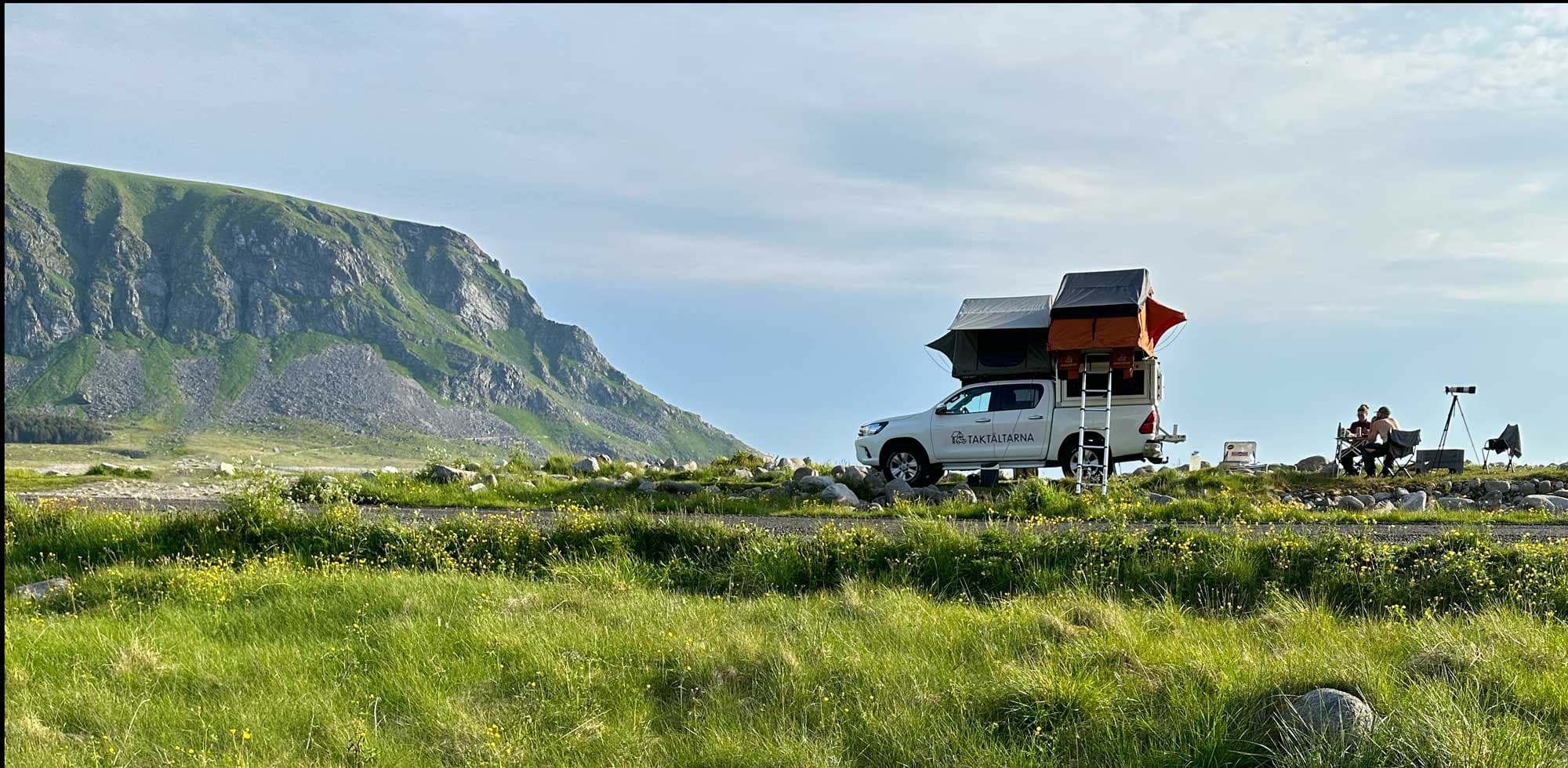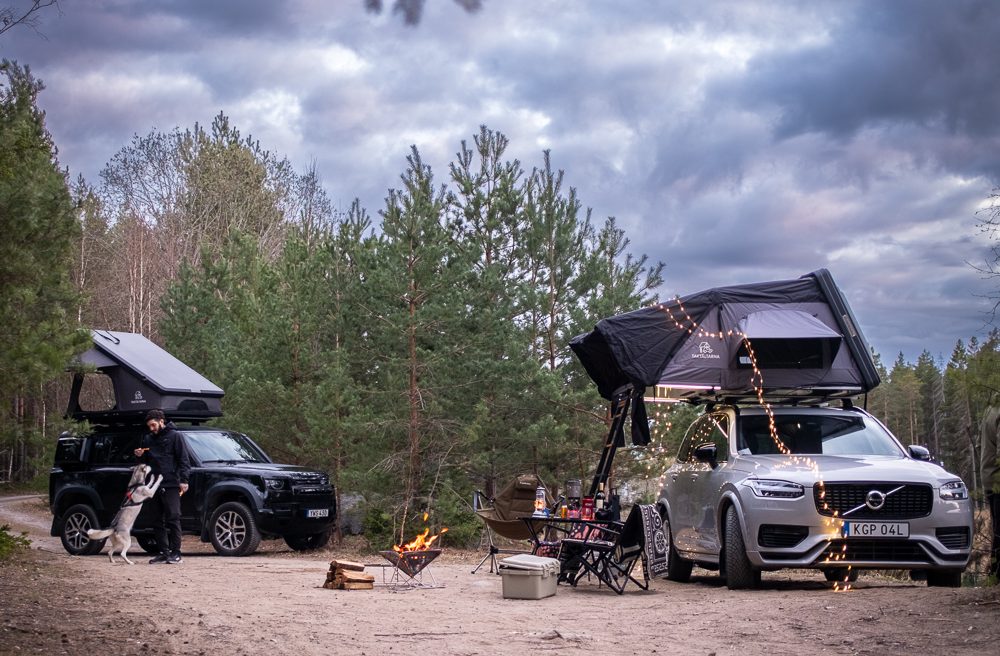

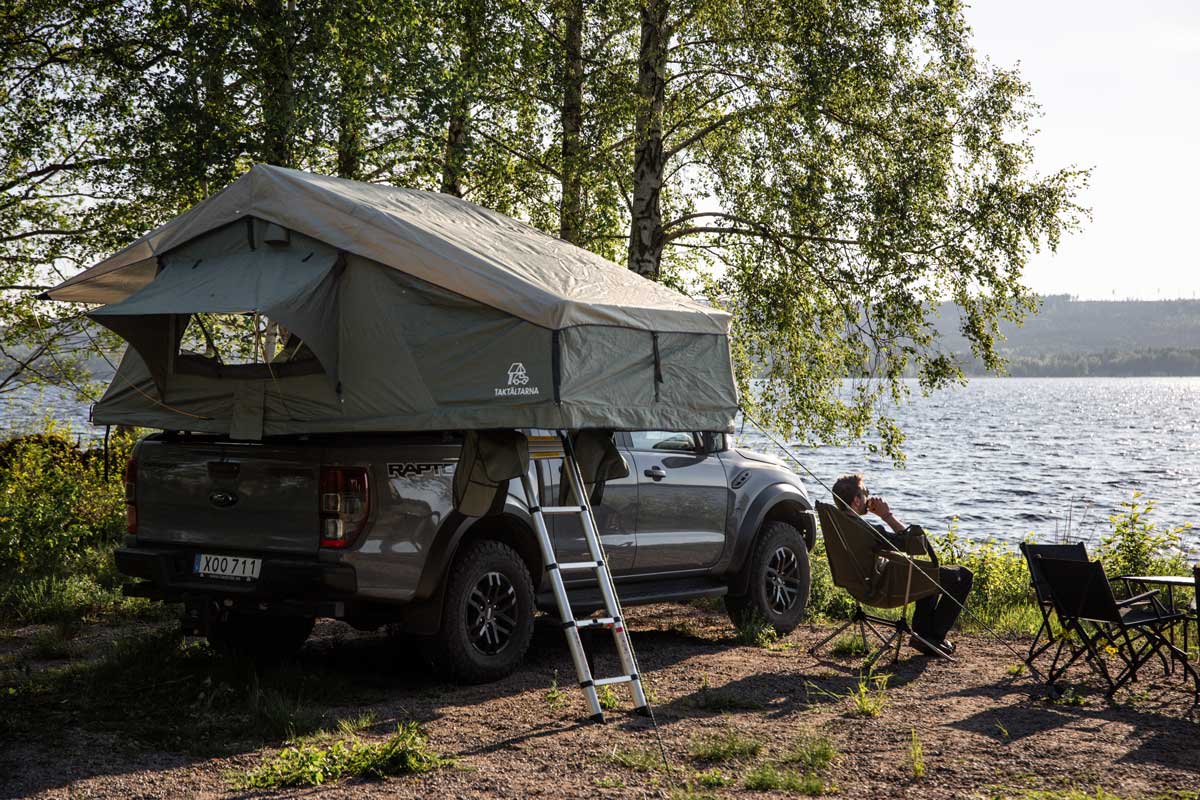
When you are going out to find wonderful campsites with your roof tent, motorhome, or van, there are some things you need to consider. Here you get an overview of what applies.
As the trends for roof tents, van life, and motorhomes grow stronger, more and more questions arise about where it is okay to (free) camp and where it is not. And there are several rules and regulations you need to adhere to when you hit the Swedish roads.
I hope you won't be too discouraged by reading about restrictions and rules below. Sure, it can feel a bit sad sometimes, but remember that if many break the rules, the risk of more bans only increases! If we all help to follow the rules and ALWAYS clean up after ourselves, hopefully, it will still be okay to find beautiful campsites along our Swedish roads in the future!
And finding magical (free) camping spots to stay at usually isn't that hard. Here I list five tips on how you can do it.
Summary – this is what you should consider when camping with roof tents, motorhomes, and vans
Here is what I write about in this post. Click the links to go directly to the section that covers the topic.
- Follow the Off-Road Driving Act – stay on the road or right next to it.
- Find out if there are local restrictions where you are.
- Leave the place you camped in the same condition as when you arrived, or even better – in better condition by also picking up previous visitors' trash.
- Respect prohibition signs and barriers on private roads.
- Rest areas along the roads are okay to stop at for one day.
Roof tents (and other camping in motorized vehicles) are not covered by the Right of Public Access
Thanks to the Right of Public Access, everyone can move freely in Swedish nature. The Right of Public Access gives you, for example, the right to pitch a tent in nature in most places. However, roof tents are not covered by the Right of Public Access, something I got confirmed by the Swedish Environmental Protection Agency in spring 2021. This is what the official at the Environmental Protection Agency wrote to me in an email:
"Usually, a distinction is made between whether the overnight stay takes place in or on some form of vehicle (cars, motorhomes, towing vehicle with attached caravan, etc.) or if the overnight stay takes place entirely under the Right of Public Access, i.e., by leaving your vehicle and spending the night in a tent, hammock, or simply on the ground under the open sky, etc. This is because motorized vehicles tend to cause more damage to nature."
Off-Road Driving Act – this is what it says
The Off-Road Driving Act means that all driving of motor vehicles outside roads is prohibited. For example, you are not allowed to drive onto a forest path or onto a beach. The Off-Road Driving Act exists because motorized vehicles in nature cause damage to both the ground and plants and can also disturb wildlife. Practically all natural land is considered terrain under the law. Besides "forest and land," beaches, pastures, parkland, and lawns are also considered terrain.
If you are going to park, it is okay to do so next to the road as long as you do not damage the ground, disturb the landowner, or block the way.
What about electric cars and electric mopeds?
The Off-Road Driving Act applies regardless of how the engine is powered, so if you have an electric car, the same rules apply.
Right of Public Access – do not disturb, do not destroy
Even if your roof tenting or free camping in a motorhome or van is not covered by the Right of Public Access, you still need to keep its motto "Do not disturb – do not destroy" in mind.
This means, for example, that you should always leave the place you have been in the same condition as when you arrived. Pack a bag for trash and food leftovers so that nothing remains in nature but comes back home with you. This also applies to toilet paper. If you need to poop and there is no toilet nearby, bring a shovel, dig a hole, do your business, and then fill it back in.
Also, find out if it is okay to make a fire where you are, as there are often local fire bans in the summer. Also, remember never to make a fire directly on a rock or stones as they risk cracking.
Here is a video from the Swedish Environmental Protection Agency explaining the Right of Public Access:
Overnight stays along public roads and in parking lots
The rules for where you can stay overnight if you have a roof tent, motorhome, or van vary from municipality to municipality. Some do not even have any rules, others have bans on camping along public roads and public places. To find out what applies to the place you are at or plan to visit – check the current municipality's website or ask at the local tourist office.
Private road – respect barriers and signs
As a roof tent camper and free camper, it is not uncommon to encounter a road barrier or private road sign when searching for places to stay. It is of course disappointing, but just accept it. Along private roads, it is up to the landowner to decide whether motor traffic is allowed.
Unless otherwise stated, it is otherwise just like along public roads okay to park your car next to the road, as long as the ground is not damaged, the parking does not cause a traffic hazard, or hinder the landowner in their activities. If it is close to the landowner's house, you need to ask the landowner for permission.
(Usually) okay to stop at rest areas for one day
Rest areas are primarily intended for temporary breaks and not for camping. The basic rule is that on weekdays you may stay for a maximum of 24 hours at rest areas and marked parking spaces along public roads. On Saturdays, Sundays, and holidays, it is okay to stay until the next weekday.
Exceptions may exist, and if so, you will find them on an additional sign under the parking sign at the rest area.
Parking at nature reserves and national parks
Parking lots at nature reserves and national parks can often be nice and tempting to stay overnight at. But whether it is okay or not varies. Staying overnight in a roof tent or motorhome is perfectly fine in some cases, while it is not allowed at all in others. It all depends on how the regulations and parking rules for a particular protected area are designed.
Information about the nature reserve can be found on the county administrative boards' websites under the visits tab. For national parks, information is available at sverigesnationalparker.se under the safety and rules tab
Want to try free camping? Rent or buy a roof tent!
We at Taktältarna love discovering the world by traveling around with a car and roof tent. With a roof tent, it becomes easy and convenient. Cheaper and more fun than a motorhome and vans – simpler than a regular tent. With us, you can both buy and rent roof tents. Not convinced? Here we list 16 reasons to choose a roof tent.