

The principle of the Right of Public Access "Do not disturb – do not destroy" is a good guideline for those who want to camp in a sustainable way. Here we list some concrete tips on how you can camp in a more environmentally friendly way.
The more I go out camping with my roof tent, the more I appreciate our fantastic nature. With that appreciation has also come an increased awareness that my and your nights in tents (whether in a motorhome, van, a regular tent, or as for me, mostly in a roof tent) leave traces on the places where we set up camp.
Here are some tips on how you can camp in a more environmentally friendly way and reduce your negative impact.
1. Leave the place as it was when you arrived or better
It may sound obvious, but in most places I stop, I find trash and plastic left behind by previous visitors. ALWAYS take your trash and belongings with you when you leave a place (including any cigarette butts!). To spare the next visitor the same experience, I also usually pick up trash left by others. This way, you do a service both for the environment and for those who visit the place after you.
3. Try to reduce plastic use and disposable items
Skip buying water in PET bottles and instead bring a large container that you refill during the trip at gas stations/campgrounds/restaurants. Use plates and cutlery that can be washed, avoid paper plates, plastic cups, and cutlery.
3. Bring toilet paper and bury your poop
Toilet paper is the most common thing you encounter at places where people stop to camp or rest with their car. Few things can ruin the idyllic feeling more. It is DISGUSTING, especially when you have children and dogs running around in it. No, ALWAYS bring a bag to put your toilet paper in or burn it. It may feel a bit unpleasant for you, but it is definitely EVEN more unpleasant for the person who comes after you to see your remains. And then there is the matter of number two. If you need to go – dig a small hole for the purpose (no pun intended) which you then fill in. A regular garden spade works well.
4. Choose soap and dish detergent without harmful chemicals
Avoid rinsing more chemicals into our lakes and rivers by always using environmentally friendly soap, toothpaste, and dish detergent. Soap can take you a long way!
5. Burn fire smartly and safely
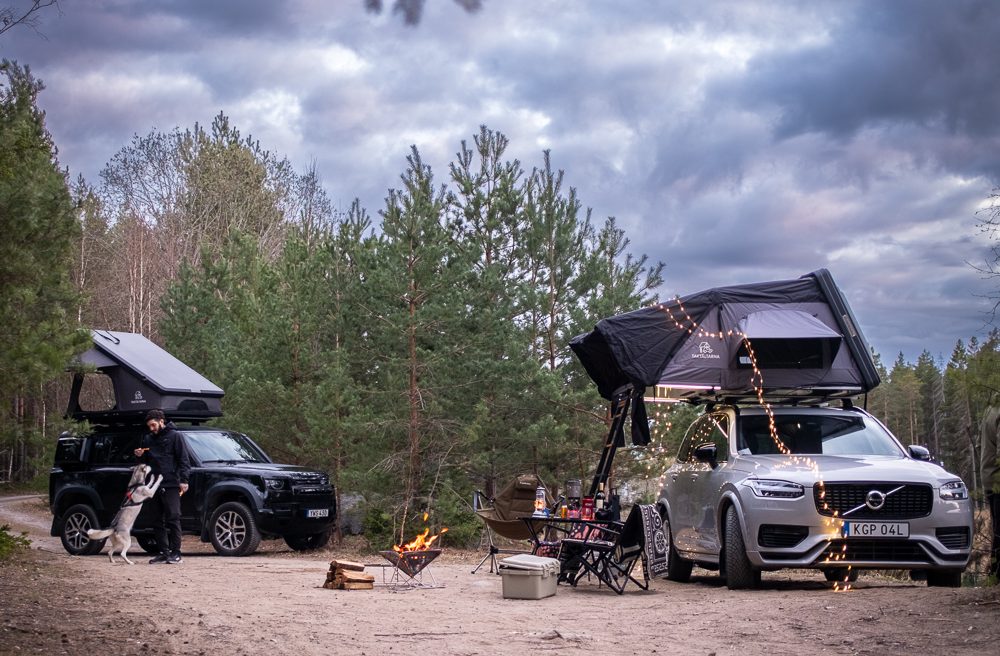
Check if there are restrictions on fires in the area and follow them, usually found on the municipality's website. Choose a place for the fire where there is no risk of it spreading or damaging the ground and vegetation. It is important to choose a place for the fire where there is no risk of it spreading or damaging the ground and vegetation. You can use loose branches and cones you find on the ground, but it is not allowed to pull off or saw down branches from trees or bushes. Never light a fire on rock slabs. They can crack. Always make sure the fire is completely extinguished when you leave the place.
6. Respect private roads
As a roof tent camper, I always look for secluded places to set up camp. Very often I have found a small road leading down to a lake that looks perfect to stop at, only to be met by either a road barrier or a sign for a private road. As tempting as it is to continue, I do not. The landowner has the right to close roads to motor traffic, and I do not want to contribute to bad feelings or that roof tent campers and other campers are seen as a problem.
7. Choose an eco-labeled campsite
The Green Key certification is the tourism industry's certification for the environment and sets requirements on how water, food and drink, waste, energy, and much more are managed. There are also other environmental certifications you can look out for. camping.se has a list of eco-labeled campsites.
8. Use things you already have or buy secondhand
There is an abundance of gear aimed at camping life, and it can be hard not to be hit by strong desires to have more. But maybe you don’t need to buy a new sleeping bag? We usually use our regular blankets and sheets. Check your storage and see if you can find some old deck chairs to sit in. Nowadays, it is also possible to rent much of the equipment; we at Taktältarna have some – Outdoor Buddies has even more. They also ship all over Sweden. If you are going to buy, check what is available on Blocket or in outdoor pages/groups on Facebook. There is usually a high turnover of items.
Interested in trying camping with a roof tent? Try renting a roof tent from us at Taktältarna!